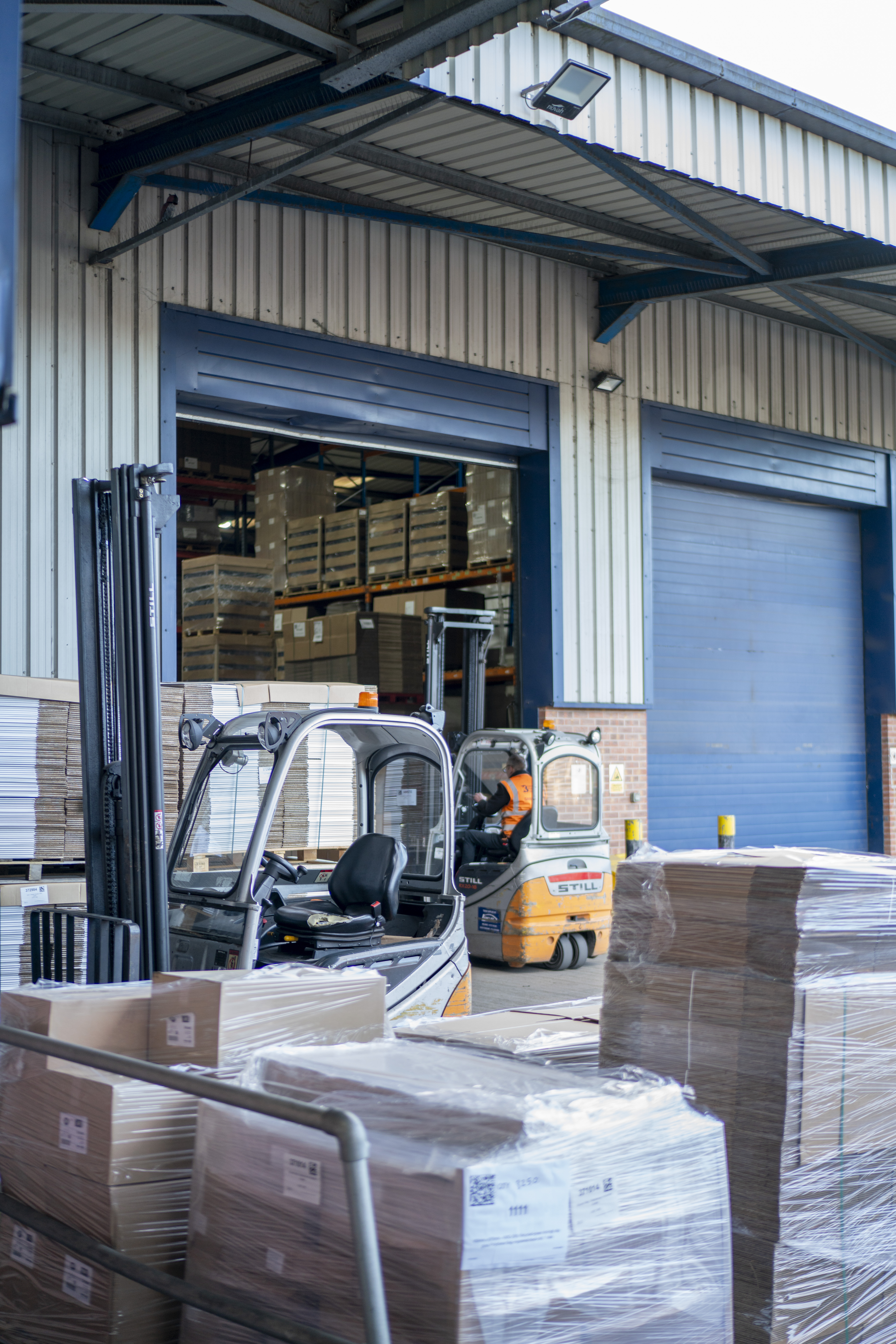
What Operations and Warehouse Managers Should Be Preparing For
For operations and warehouse managers, the operating environment has changed. Cost pressures are more volatile, supply chains are less predictable, and environmental responsibility now sits firmly within day-to-day operational decision-making.
The causes behind these shifts are complex, but the impacts are clear, and they’re felt most sharply inside warehouses, fulfilment centres, and distribution networks. Preparing for what’s ahead is no longer about reacting faster; it’s about building resilience into everyday operations.
Continued Cost Pressure Across the Supply Chain
Cost pressure is no longer temporary or isolated. Energy, transport, materials, and labour costs all interact, creating cumulative strain across the supply chain.
For warehouse managers, this often shows up as:
- Higher inbound and outbound transport costs
- Increased pressure to do more with the same (or fewer) resources
- Tighter margins that expose inefficiencies faster
In this environment, inefficiencies that once went unnoticed are exposed quickly. Packaging plays a quiet but significant role here. Oversized cartons, excessive void fill, and inconsistent pack formats increase shipping volumes, slow packing lines, and waste valuable space. These are rarely seen as “packaging problems” in isolation, but their financial impact compounds across storage, labour, and transport.
Preparing for sustained cost pressure means reviewing packaging as part of operational performance — not just procurement.
Supply and Lead Time Variability Is Here to Stay
Extended and unpredictable lead times have become a structural challenge rather than a short-term disruption. Materials arrive later than planned, production schedules shift, and availability can change with little warning.
When packaging isn’t planned with this variability in mind, warehouses are forced into reactive decisions. Stock is held longer than intended, substitutions are made under pressure, and teams adapt around packaging that was never designed for flexibility. Over time, this increases handling, slows throughput, and introduces avoidable risk.
Operations teams that prepare well tend to simplify where possible, rationalising pack types, choosing versatile formats, and aligning packaging decisions with stockholding strategies rather than treating them as a last-minute requirement.
Increased Scrutiny on Environmental Impact
Environmental responsibility is no longer confined to sustainability teams.
Warehouses are under growing pressure to demonstrate:
- Reduced waste
- Easier recycling streams
- Lower overall material usage
Over-packaging, mixed materials, and unnecessary protective layers don’t just affect sustainability targets, they increase handling time, waste management costs, and storage requirements.
Operations teams should be preparing for:
- Greater visibility of packaging waste metrics
- Customer and stakeholder questions around recyclability
- Internal pressure to justify material choices
Fit-for-purpose packaging that uses the right amount of material — no more, no less — supports both environmental and operational goals.
Space, Labour, and Throughput Will Remain Under Pressure
Most warehouses are being asked to move more product without expanding footprint or headcount. That places consistent pressure on packing speed, storage density, and ease of handling.
Packaging that is awkward to assemble, inconsistent in size, or poorly suited to automation slows everything down. Small delays on a packing line quickly build into missed cut-offs, overtime, and increased pressure on teams. What often feels like a resourcing issue is, in reality, a packaging design issue showing up downstream.
Preparing for future demand means ensuring packaging supports speed and consistency, not just protection in transit.
The Shift Toward Preventative Operations
Across both economic and environmental pressures, one theme is clear: reactive operations cost more.
When packaging problems are only addressed after damage, delays, or waste become routine, the cost has already been absorbed. More resilient operations take a preventative approach — reviewing packaging regularly, testing it under peak conditions, and treating it as part of risk management rather than a static supply item.
The most effective operations recognise that packaging decisions influence far more than the box itself. They shape efficiency, cost control, sustainability performance, and day-to-day pressure on warehouse teams.
Preparing Starts with the Right Foundations
Economic uncertainty and environmental responsibility are no longer separate challenges. They intersect daily in warehouses and fulfilment operations, shaping decisions around cost control, efficiency, and long-term resilience.
Operations and warehouse managers who prepare effectively will be those who reduce unnecessary complexity, design for efficiency under pressure, and treat packaging as a strategic operational decision — not an afterthought.
This is where KB Packaging supports operations teams beyond simply supplying packaging. By focusing on fit-for-purpose solutions designed around product, process, and real-world warehouse pressures, packaging becomes a stabilising force within the supply chain rather than a source of disruption.
Because when packaging works, it quietly supports the entire operation. And when it doesn’t, the impact is rarely quiet at all.